CONTEXT ➴
Future Leaders Initiative (FLI) is a Sierra Leone-based nonprofit working to prevent violence in schools, homes, and communities.
FLI needed a digital system that could
- Provide children a free and approachable way to report violence, bullying, or abuse
- Help staff identify patterns across incidents
- Prove evidence of impact to donors, government agencies, and the international community
PROBLEM ➴
Reporting violence is already an intimidating task.
For children in Sierra Leone, the process may also involve:
- Limited literacy or unfamiliarity with formal language
- Uncertainty about what information to provide
- Unreliable internet access
- Discomfort sharing sensitive details
- Difficulty identifying or categorizing what happened
Our challenge was to collect useful information for FLI without making children feel confused, pressured, or blocked from submitting a report.
GOALS ➴
Make reporting approachable
Create a mobile experience that feels supportive, understandable, and easy to complete.
Identify areas of concern
Structure report data so FLI can recognize patterns in where and how violence occurs.
Turn reports into action
Give FLI tools to review incidents, allocate resources, and communicate its impact.
SOLUTIONS ➴
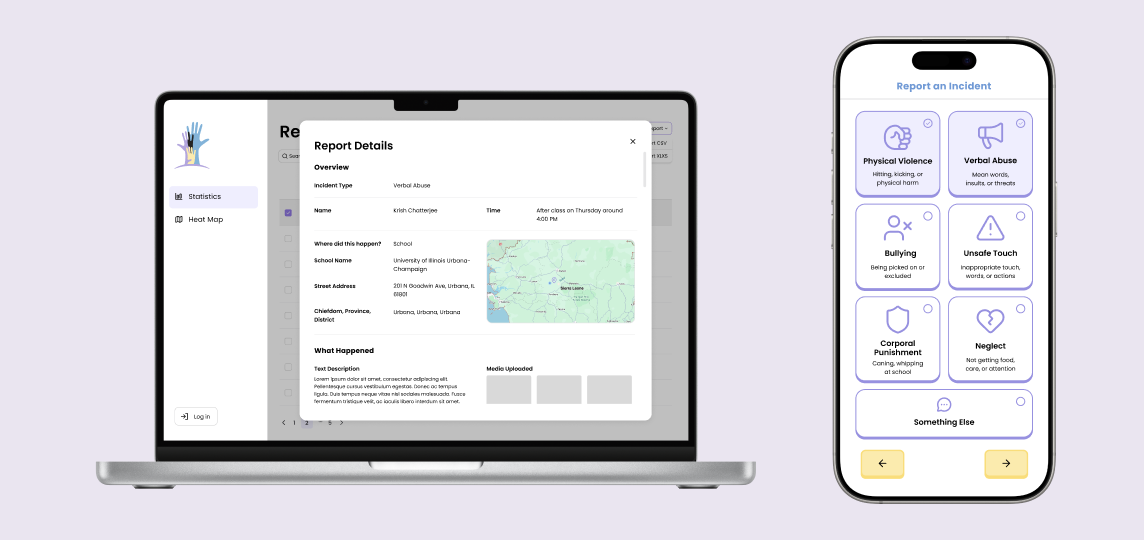
Two platforms, two audiences
We designed two connected products:
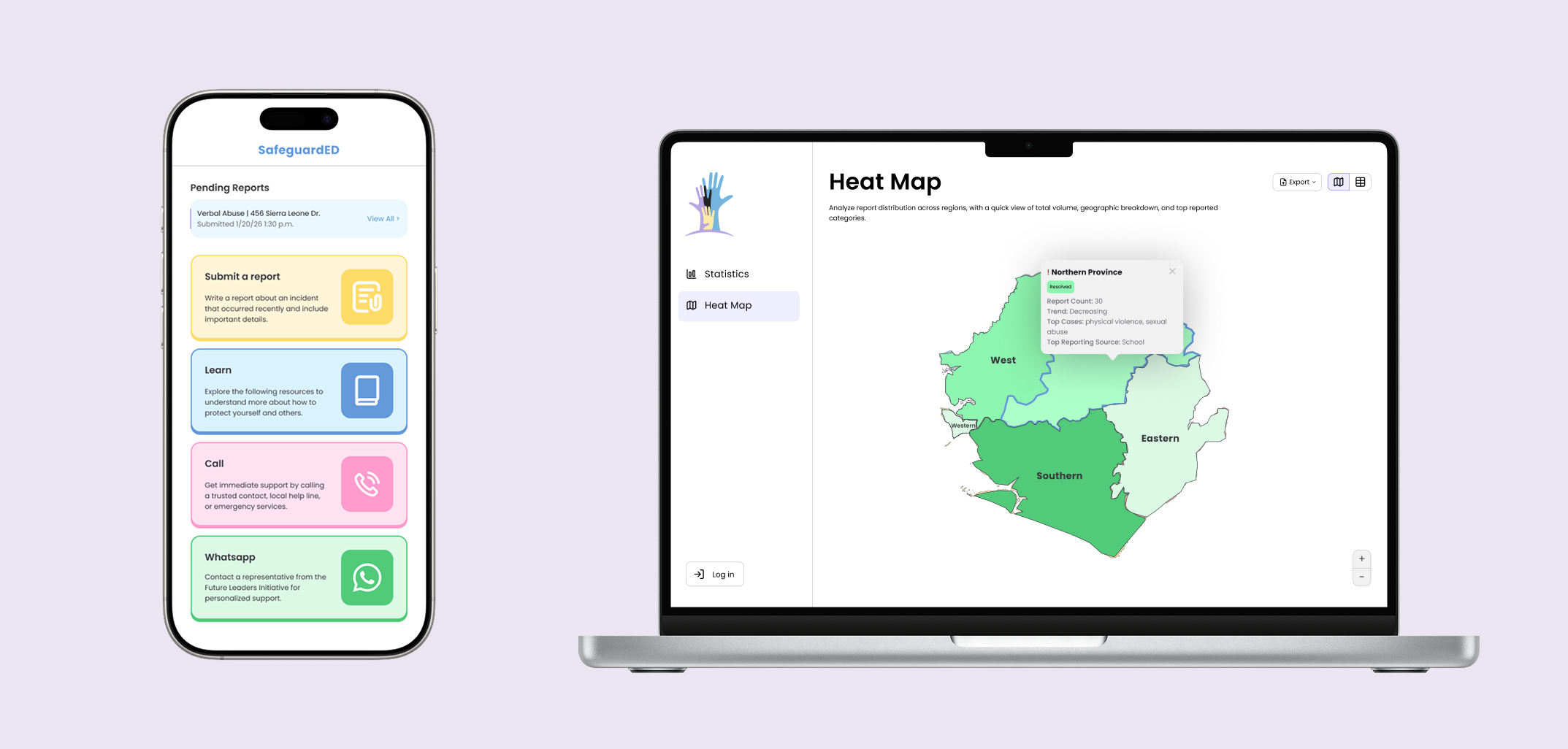
Mobile reporting app
Designed primarily for children and community members submitting reports.
We prioritized:
- Large touch targets
- Recognizable icons
- Friendly, reassuring language
- Welcoming colors
- Flexible input options
Web admin dashboard
Designed for FLI staff reviewing and analyzing reports.
We prioritized:
- Clear information hierarchy
- Efficient report management
- Structured data visualization
- Limited color for emphasis and categorization
Making sure uncertainty would not stop a report
Throughout the reporting flow, we had to account for the fact that a child might not know every answer.
After consulting with FLI, we made most questions optional. For the organization, a report with limited information was still more valuable than no report at all. For the child, this meant uncertainty would not prevent them from speaking up.
Instead of treating missing information as a failure, we designed the form to help users share what they did know and continue without added pressure.
Guiding children from “Where?” to useful location data, starting with how a child thinks about place
Location was one of the most debated parts of the reporting flow.
FLI needed location data to understand where violence was happening, but the most common input methods created barriers:
Map Pin
Precise, but difficult for children to navigate and unreliable if they were no longer at the incident location
Free-text field
Easy to complete, but answers such as “at school” would be difficult to analyze
Address form
More structured, but long and dependent on information a child may not know
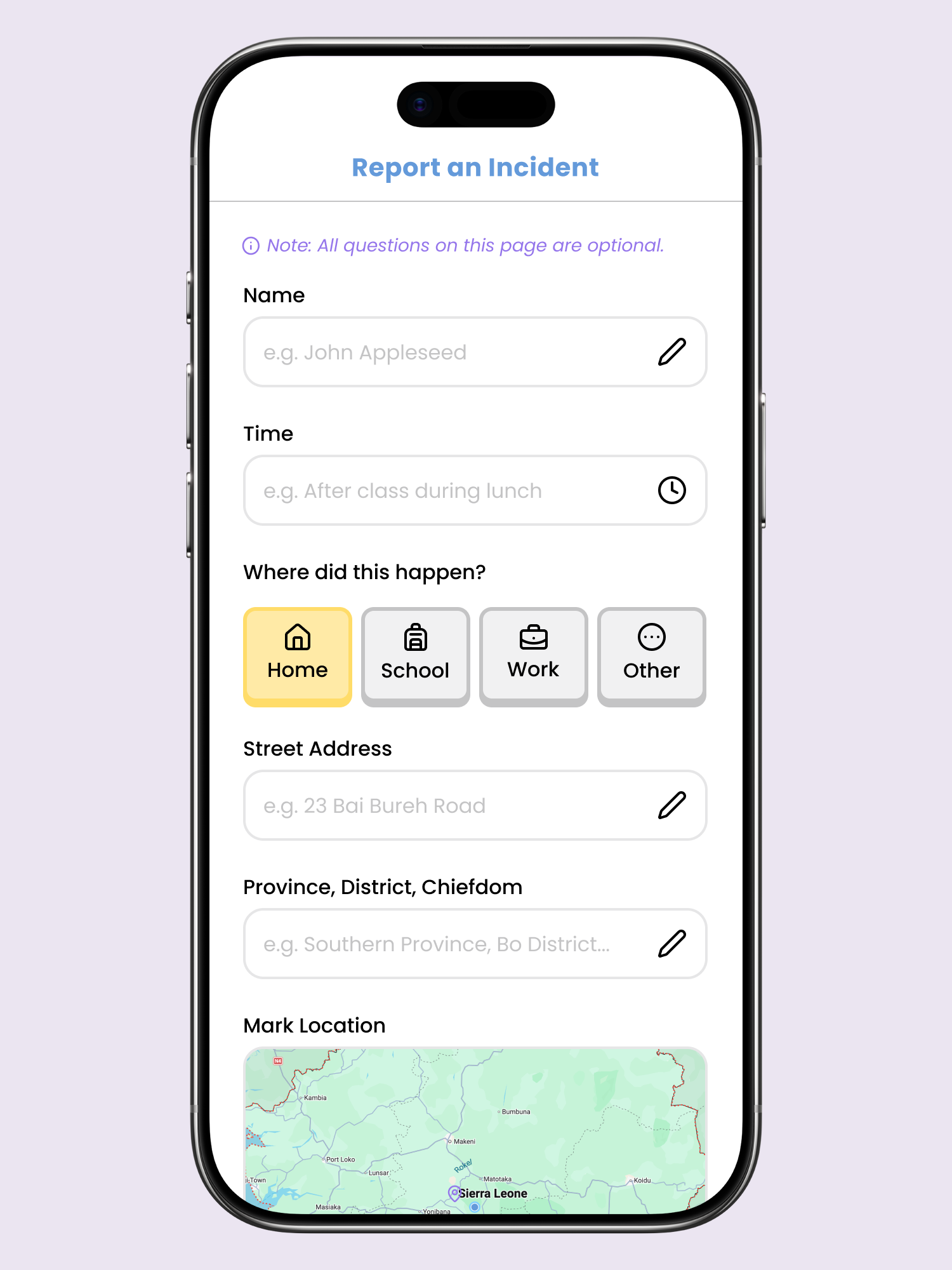
I proposed starting with how a child would naturally remember the location: the type of place.
After choosing a category like Home or School, users only see questions relevant to that setting. This guides them toward useful details without presenting a long form upfront.
Through discussions with FLI, we learned that their main priority was recognizing patterns rather than collecting an exact GPS point.
Preserving trust, even without connection
Because internet access can be inconsistent in Sierra Leone, offline reports are saved in a visible queue until they can be submitted.
This reassures users that their report is not lost, discourages them from deleting the app, and helps preserve trust in an already difficult reporting process.
Turning reports into action
The dashboard helps FLI move from reviewing individual reports to recognizing broader patterns.
By surfacing trends across location and violence type, it supports more informed decisions about where to focus resources and how to communicate impact.
REFLECTIONS ➴
This project marked my first time using components! However, beyond that, there was much more to learn.
Protecting the user through every tradeoff
Every design decision had to balance what FLI needed to learn with what a child could realistically understand, provide, and feel safe with.
Making decisions with momentum
We finalized decisions early enough to keep moving, then adapted them as the product revealed new needs.
Letting implementation sharpen the designs
Working closely with developers pushed me to think beyond the screen and improve designs through fast, cross-functional feedback.
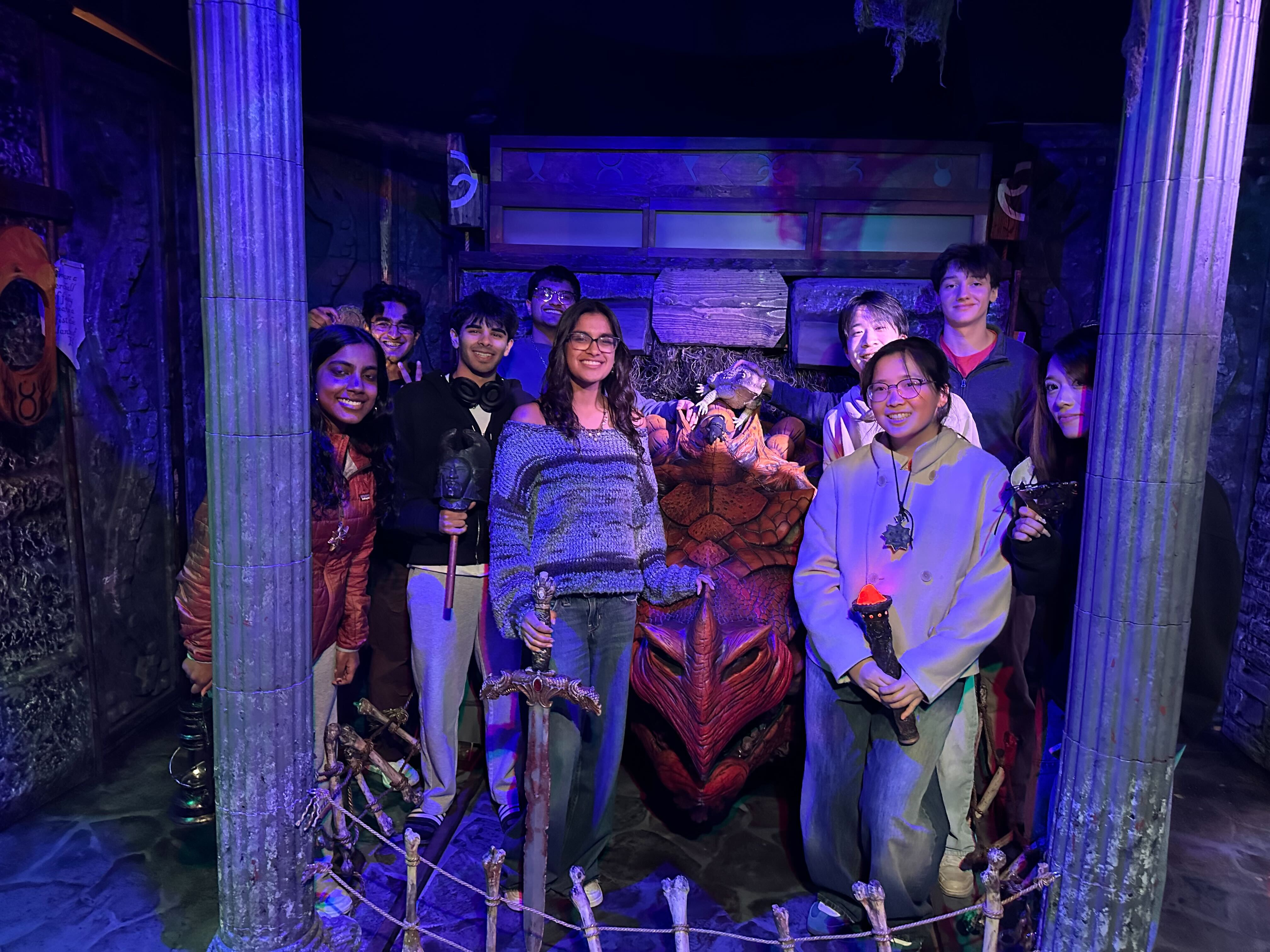
Thank you to Future Leaders Initiative, my team, and Hack4Impact @ UIUC!